

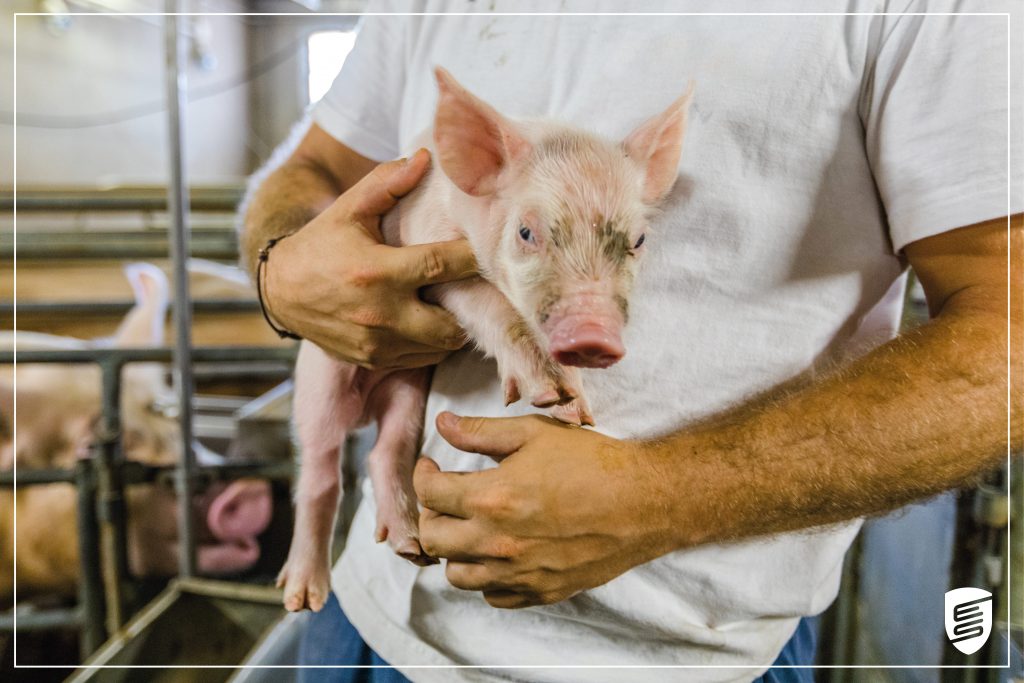
Approved and funded by Regione Lombardia in 2018, and launched in December of the same year, the PorCastro Project aims to improve the welfare of piglets through on-field testing of alternatives to surgical castration, currently practiced without the use of anesthesia and/or analgesia.
Currently, surgical castration without pain control is widely practiced in pig farms. Considered legal under the current legislation in the EU (and therefore also in Italy), if performed within the first seven days of life of the piglets, it can be carried out by simple workers without the use of analgesics or anesthetics, and does not even require the presence of a veterinarian.
In recent times, this practice has been heavily criticized both by the media (see an article published by the Corriere della Sera in March 2016) and by animal welfare organizations (see an investigation conducted by the Animal Equity association in 2015). Animal-friendly alternative systems can have a significant impact on income defense, as they better meet the demands of consumers who are more concerned about the ethical aspects of the product.
Alternative animal-friendly systems can have a significant impact on income defense, as they respond more to the demands of consumers who are more demanding regarding the ethical aspects of the product.
The Porcastro project, coordinated and conducted by the Department of Veterinary Medicine of the University of Milan in collaboration with the CRPA Foundation Studies Research of Reggio Emilia, the IRCCS Ca’ Granda Hospital Foundation, and Allevamenti di Nerviano srl, will conclude after 36 months, in December 2021.
The expected results are:
- Verification of immunocastration as an alternative method to surgical castration in heavy pig farming
- Verification of a new protocol for surgical castration with pain control
- Verification of the feasibility of gas anesthesia
- The impact of the studied alternative methods on production costs
Pig farmers, breeding technicians, and veterinarians will be able to access the research results through scientific publications, informative articles, and informational brochures.
Indirect beneficiaries will be consumers and anyone interested in the “ethical” qualities of products, among which animal welfare is very relevant, through the dissemination of press releases and newsletters via major regional media outlets.